opencopyInterlinear Books
Look insideHow it worksBlogContact
  • Look inside
  • How it works
  • Blog
  • Contact
Bilingual Bedtime/German songs
ErzählliedStory song

Es war eine Mutter.

Es war eine Mutter, die hatte vier Kinder
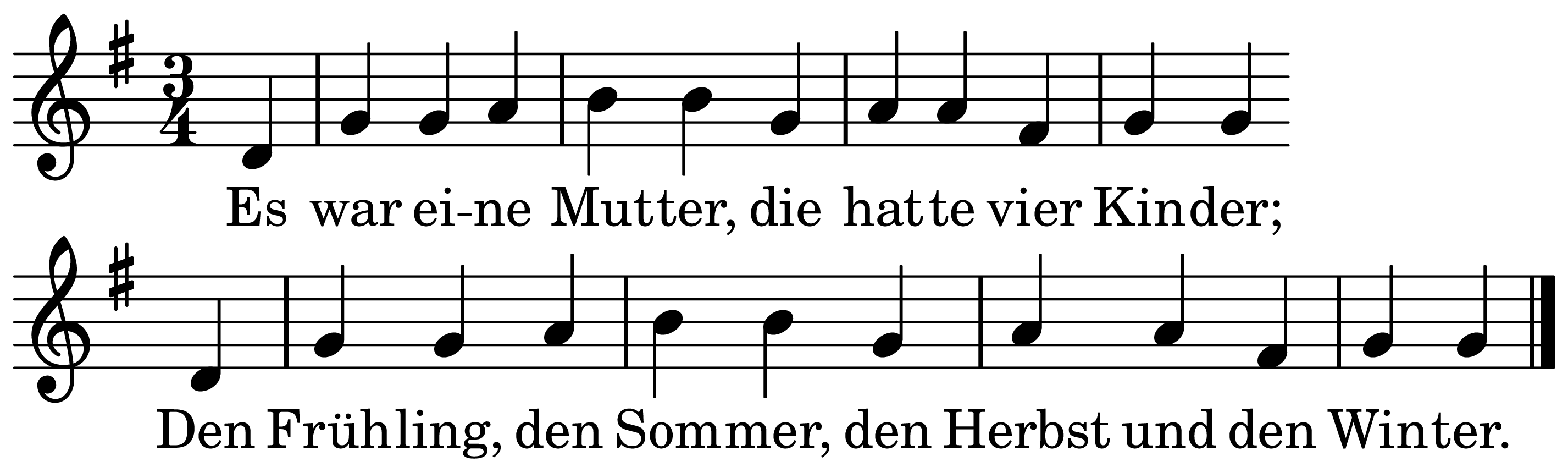
The melody of Es war eine Mutter on a staff, as engraved in the book
Download the tune

The melody as written on the staff, so you can learn the tune before you sing.

Verse 1

  1. Es war eine Mutter, die hatte vier Kinder;ehs vahr ai-nuh moot-ter, dee haht-tuh feer kin-der;There was a mother who had four children;
  2. Den Frühling, den Sommer, den Herbst und den Winter.dayn frew-ling, dayn zom-mer, dayn hehrpst oont dayn vin-ter.The spring, the summer, the autumn and the winter.

Verse 2

  1. Der Frühling bringt Blumen, der Sommer bringt Klee,dair frew-ling bringt bloo-muhn, dair zom-mer bringt klay,The spring brings flowers, the summer brings clover,
  2. Der Herbst der bringt Trauben, der Winter bringt Schnee.dair hehrpst dair bringt trow-buhn, dair vin-ter bringt shnay.The autumn, it brings grapes, the winter brings snow.

Verse 3

  1. Das Klatschen, das Klatschen, das muss man verstehn,dahs klaht-shuhn, dahs klaht-shuhn, dahs moos mahn fer-shtayn,The clapping, the clapping, that you have to know how to do,
  2. Da muss man sich dreimal im Kreise umdrehn.dah moos mahn zikh drai-mahl im krai-zuh oom-drayn.then you have to turn yourself round three times in the circle.
About this song

Elizabeth Marriage took this down at Nüstenbach in Baden and printed it in 1902 as a Kinderspiel, a children's game. The ring walks round for verse one, a child steps inside for the seasons, and on verse three everybody claps and turns three times. Verstehn and umdrehn are the short forms that carry the rhyme.

Where it comes from

The words: Elizabeth Marriage, Volkslieder aus der badischen Pfalz (M. Niemeyer, Halle a. S., 1902), S. 371, Nr. 273.

The tune: Marriage engraves the tune herself above the text: Elizabeth Marriage, Volkslieder aus der badischen Pfalz (M. Niemeyer, Halle a. S., 1902), Nr. 273 'Vier Jahreszeiten', subtitled 'Kinderspiel', S. 371, one system, treble clef, one sharp, an upbeat quarter and four bars, with repeat dots before the closing double bar (archive.org volksliederausd00marrgoog, page image n391_w1000.jpg). The noteheads were measured against the five staff lines of the page image and read d' | g' g' a' | b' b' g' | a' a' fis' | g' g', twelve notes. Cross-checked against the score block in the 'Melodie' section of the de.wikipedia article 'Es war eine Mutter', which cites this same page of Marriage and prints the identical twelve pitches in G major. One discrepancy is resolved as Wikipedia resolves it: Marriage's time signature is engraved '2/4' but she writes three quarter notes to every bar, so the tune is set in 3/4 with an upbeat. Engraved in G major at Marriage's own pitch, no transposition; her repeat is written out in full so that both printed lines of stanza 1 can be underlaid, as she underlays them

From the book

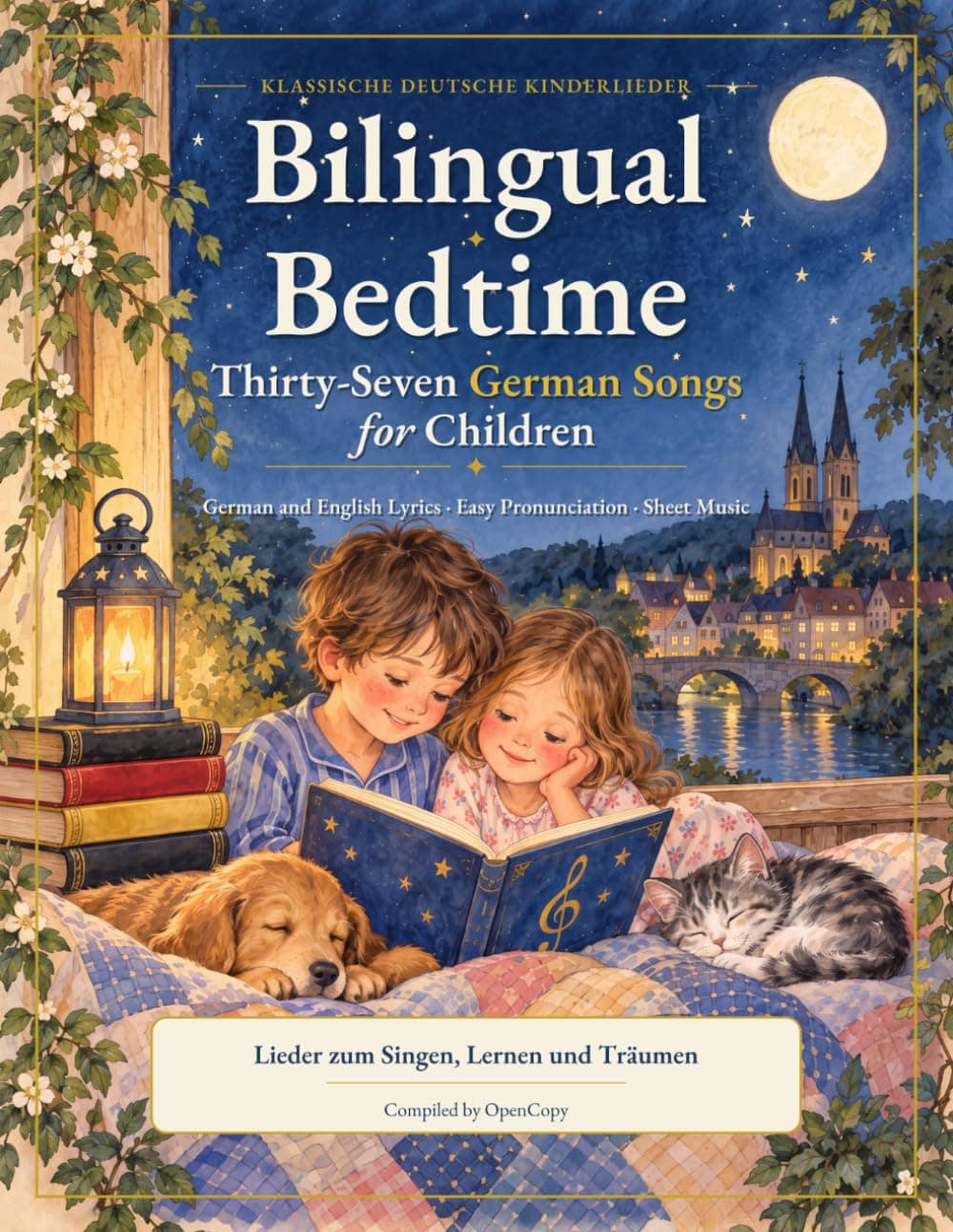
Bilingual Bedtime

Thirty-Seven German Songs for Children

Buy paperbackBuy KindleBuy hardcoverAbout this edition
Schneeflöckchen, WeißröckchenAll 37 songsHänsel und Gretel verliefen sich im Wald
opencopy© 2026
Look insideHow it worksBlogAboutJobsContactPrivacyTermsAccessibility