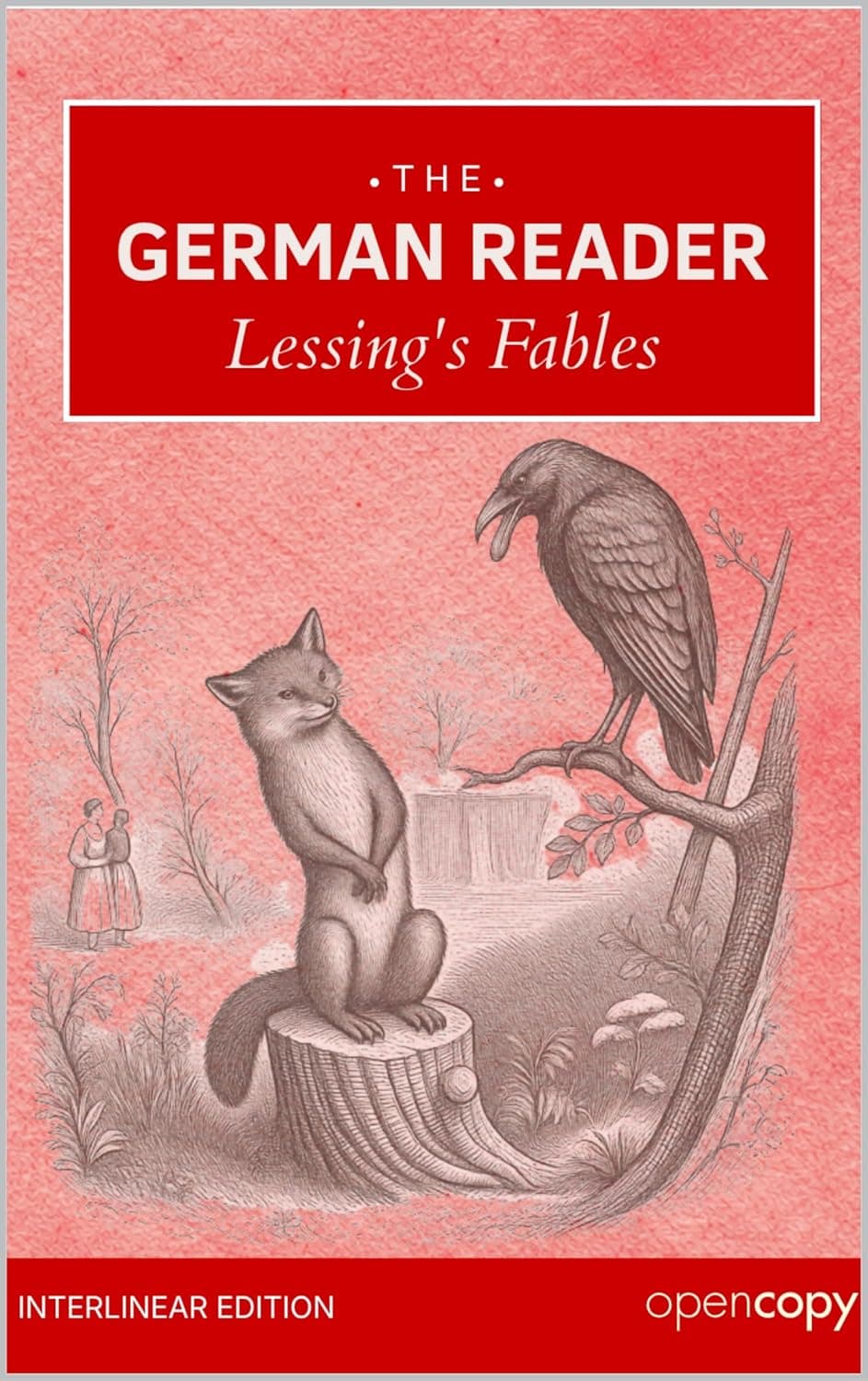
Lessing's Fables.
G. E. Lessing · The German Reader
The sharp, witty fables of Gotthold Ephraim Lessing in modernised German spelling, with a literal English gloss beneath every line and a "What It Means" note after each fable.
92 pages · Paperback & Kindle · Beginner–intermediate
the opening of “Der Rabe und der Fuchs” (The Raven and the Fox)
Fables in a single breath.
Complete short fables, each one a page of real German you can finish in one sitting.
Lessing's fables are made for German learners: short, sharp and linguistically precise, each one a complete story in a page or less. They were written to be read in a single breath, which is exactly what the interlinear format lets you do in German.
Every line of the original prose carries a literal, word-for-word English gloss directly beneath it, and the eighteenth-century spelling has been updated to current conventions while preserving Lessing's concise, punchy sentence structure. After each fable, a short "What It Means" note supplies the literary context, so you finish each piece having read real German and understood why it endures.
- 01Lessing's classic fablesThe raven and the fox, the sparrows, the goose and more
- 02Modernised spellingCurrent German conventions, Lessing's original voice and structure
- 03"What It Means" notesLiterary context and analysis after every fable
- 04Word-for-word glossA literal English line beneath every line of German
Why this edition.
Complete stories, tiny doses
Each fable is a whole narrative in a page or less, the rare chance to finish real German literature on day one and every day after.
Read without interruption
The gloss sits directly beneath the line, so unfamiliar words never send you to a dictionary or break the fable's rhythm.
See the sentence work
The literal gloss preserves the German structure beneath every line, so Lessing's concise, punchy syntax teaches itself by exposure.
Current spelling, Lessing's voice
The eighteenth-century spelling is updated to today's conventions while the sharp sentence rhythm that made the fables famous stays exactly as written.
Context included
The "What It Means" notes explain the wit, the eighteenth-century targets and the moral inversions, so you appreciate the fables as literature, not just practice text.
the opening of “Der Rabe und der Fuchs”, glossed exactly as in the book
The details.
- Series
- The German Reader
- Language pair
- German–English interlinear
- Format
- Paperback & Kindle
- Print length
- 92 pages
- Source text
- Lessing's fables, spelling modernised
- Level
- Beginner–intermediate (A2–B1)
- Published
- May 2026
- ASIN
- B0H3CFSVYY
More in German.
Every edition is glossed by hand, word by word, and printed on demand by Amazon.
Read Lessing's Fables with every word translated beneath the original.
Buy on Amazon