opencopyInterlinear Books
Look insideHow it worksBlogContact
  • Look inside
  • How it works
  • Blog
  • Contact
Bilingual Bedtime/German songs
FestliedFestive song

Alle Jahre wieder.

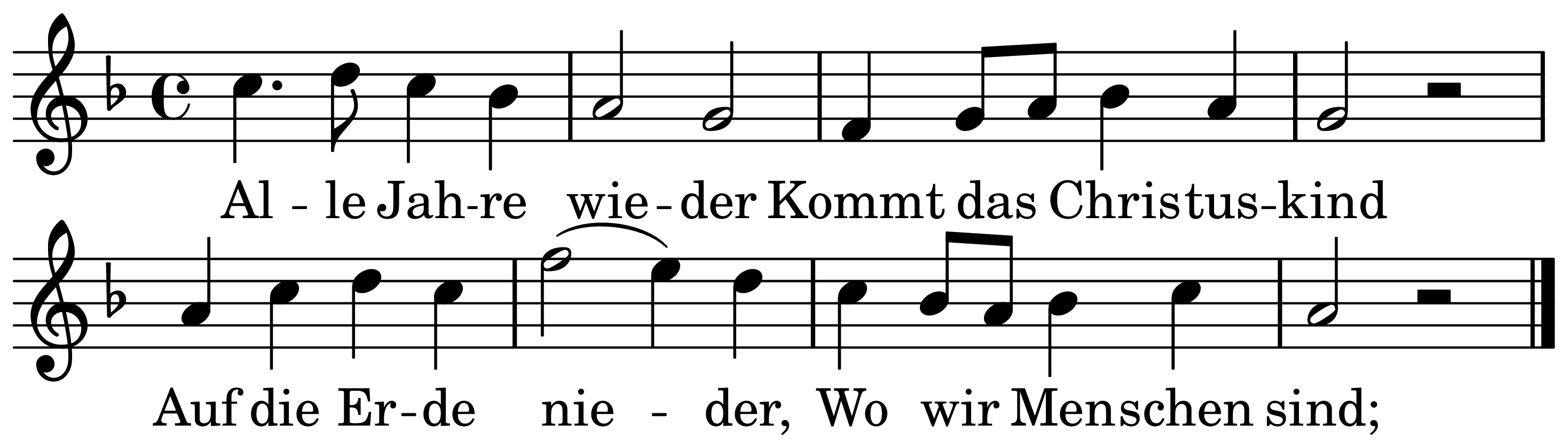
The melody of Alle Jahre wieder on a staff, as engraved in the book
Download the tune

The melody as written on the staff, so you can learn the tune before you sing.

Verse 1

  1. Alle Jahre wiederahl-luh yah-ruh vee-derEvery year again
  2. Kommt das Christuskindkomt dahs kris-toos-kintthe Christ child comes
  3. Auf die Erde nieder,owf dee ehr-duh nee-der,down onto the earth,
  4. Wo wir Menschen sind;voh veer mehn-shuhn zint;where we people are;

Verse 2

  1. Kehrt mit seinem Segenkayrt mit zai-nuhm zay-guhnWith its blessing it enters
  2. Ein in jedes Haus,ain in yay-duhs hows,every house,
  3. Geht auf allen Wegengayt owf ahl-luhn vay-guhngoes along all the roads
  4. Mit uns ein und aus;mit oons ain oont ows;in and out with us;

Verse 3

  1. Ist auch mir zur Seiteist owkh meer tsoor zai-tuhIs at my side as well,
  2. Still und unerkannt,shtil oont oon-er-kahnt,quiet and unrecognized,
  3. Dass es treu mich leitedahs ehs troy mikh lai-tuhso that it may faithfully lead me
  4. An der lieben Hand.ahn dair lee-buhn hahnt.by the dear hand.
About this song

Wilhelm Hey printed these twelve lines in 1837, in the serious appendix to his second book of fables, and Friedrich Silcher set them in 1842. It is a quiet Advent song rather than a loud one. The Christkind is the gift bringer German children wait for, and the last verse asks it to lead the child by the hand.

Where it comes from

The words: Wilhelm Hey, Noch funfzig Fabeln für Kinder. In Bildern, gezeichnet von Otto Speckter. Nebst einem ernsthaften Anhange (Friedrich Perthes, Hamburg, o. J. [1837]), ernsthafter Anhang, S. 29.

The tune: Deutscher Liederschatz. Die schoensten Weisen der alten Sammlung Ludwig Erks (Edition Peters 10613, 1920), Nr. 148 'Alle Jahre wieder', S. 177, headed 'Wilhelm Hey, 1837' and 'Friedrich Silcher, 1842 / 1789-1860', marked 'In maessigem Tempo', E flat major, common time, three systems of voice over piano with all three verses underlaid. Every note was read off that voice staff, the staff lines located per system in the scan and each note head converted to a scale degree against them. E flat lies outside the book's C to G range, so the staff here is transposed up a major second to F major and nothing else is changed; range F4 to F5. Cross-checked degree for degree against the score block in the 'Text und Melodie' section of the de.wikipedia article 'Alle Jahre wieder' (D major, 4/4), fetched with the MediaWiki API: brought to the same tonic the two agree on all 25 notes, including the octave leap on 'nie' and the fall that follows it. They differ only in whether 'kind' and 'sind' are a dotted half plus a quarter rest (Wikipedia) or a half plus a half rest (Liederschatz), and in whether the slurred fall in 'nie-der' holds 'nie' (Liederschatz) or 'der' (Wikipedia). The print is followed on both

From the book

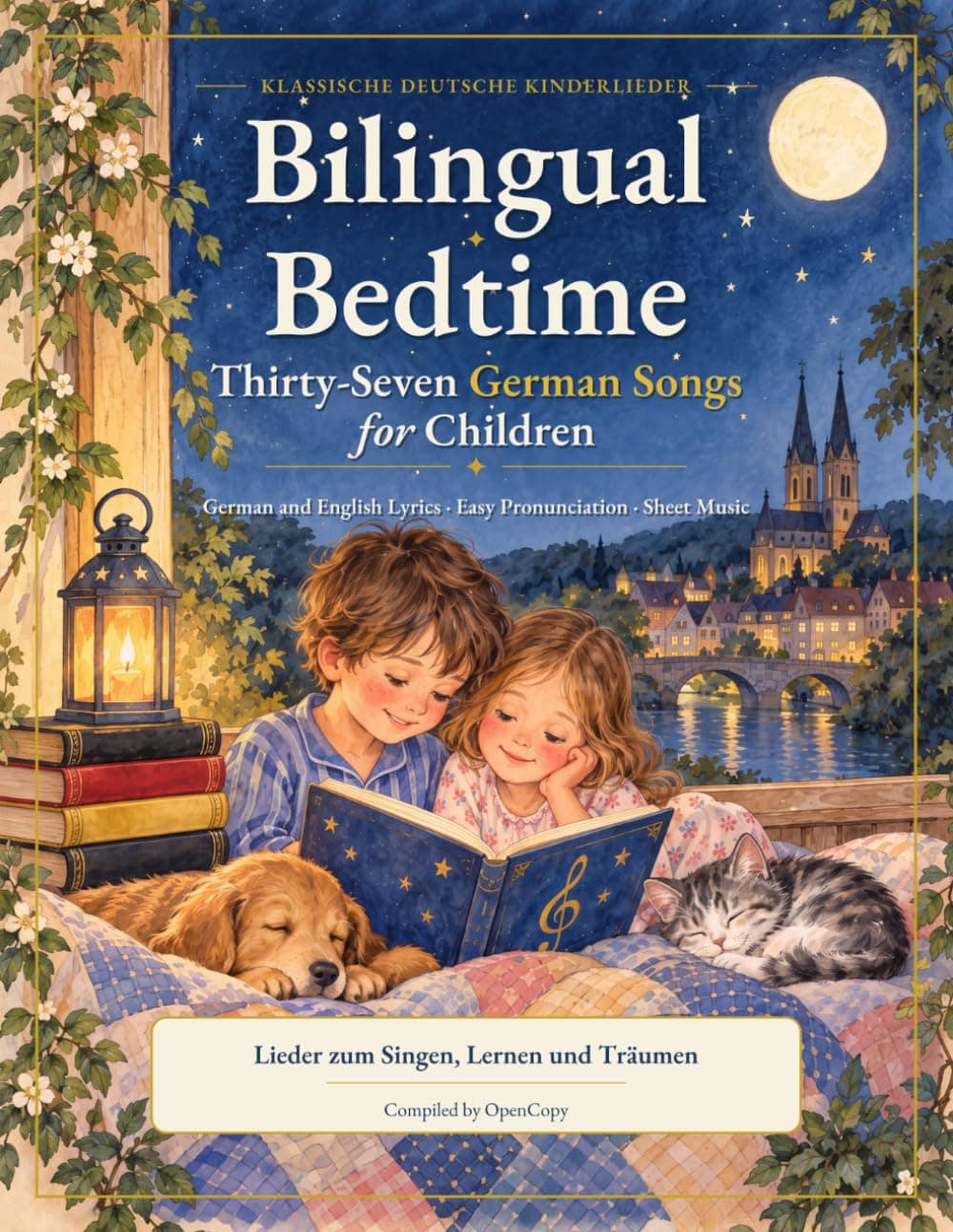
Bilingual Bedtime

Thirty-Seven German Songs for Children

Buy paperbackBuy KindleBuy hardcoverAbout this edition
Ihr Kinderlein, kommetAll 37 songsO Tannenbaum
opencopy© 2026
Look insideHow it worksBlogAboutJobsContactPrivacyTermsAccessibility