Hänschen klein.
Hänschen klein, geht allein
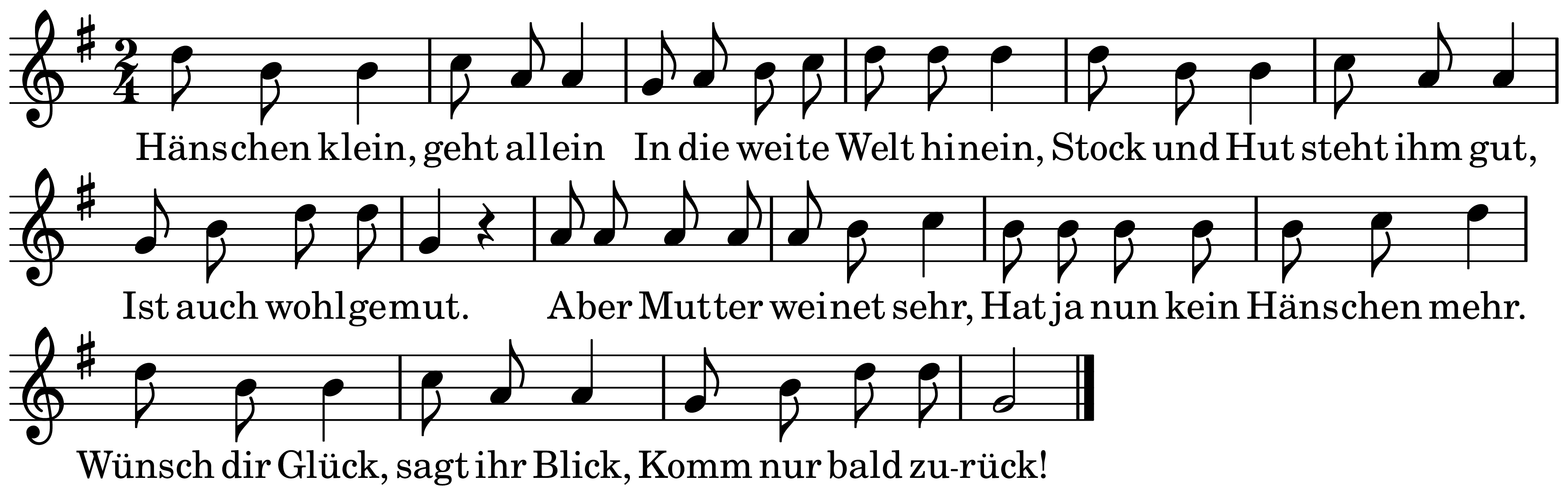
The melody as written on the staff, so you can learn the tune before you sing.
Verse 1
- Hänschen klein, geht alleinhehns-khuhn klain, gayt ahl-lainLittle Hans, he goes alone
- In die weite Welt hinein,in dee vai-tuh vehlt hi-nain,Out into the wide world,
- Stock und Hut steht ihm gut,shtok oont hoot shtayt eem goot,Stick and hat suit him well,
- Ist auch wohlgemut.ist owkh vohl-guh-moot.And he is in good spirits too.
- Aber Mutter weinet sehr,ah-ber moot-ter vai-nuht zair,But Mother weeps a great deal,
- Hat ja nun kein Hänschen mehr.haht yah noon kain hehns-khuhn mair.For now she has no little Hans any more.
- Wünsch dir Glück, sagt ihr Blick,vewnsh deer glewk, zahkt eer blik,I wish you luck, says her look,
- Komm nur bald zurück!kom noor bahlt tsoo-rewk!Only come back soon!
Verse 2
- Viele Jahr, trüb und klar,fee-luh yahr, trewp oont klahr,Many a year, dull and bright,
- Hänschen in der Fremde war.hehns-khuhn in dair frehm-duh vahr.little Hans was away in foreign parts.
- Da besinnt sich das Kind,dah buh-zint zikh dahs kint,Then the child thinks better of it,
- Ziehet heim geschwind.tsee-uht haim guh-shvint.and sets off home quickly.
- Doch, nun ist's kein Hänschen mehr,dokh, noon ists kain hehns-khuhn mair,But now he is no little Hans any more,
- Nein, ein großer Hans ist er;nain, ain groh-ser hahns ist air;no, he is a big Hans;
- Schwarz gebrannt Stirn und Hand,shvahrts guh-brahnt shtirn oont hahnt,forehead and hand tanned dark,
- Wird er wohl erkannt?virt air vohl ehr-kahnt?will he be recognized?
Verse 3
- Eins, Zwei, Drei gehn vorbei,ains, tsvai, drai gayn for-bai,One, two, three go past,
- Wissen nicht, wer das wohl sei,vis-suhn nikht, vair dahs vohl zai,they do not know who that might be,
- Schwester spricht: Welch' Gesicht!shvehs-ter shprikht: vehlkh guh-zikht!Sister says: What a face!
- Kennt den Bruder nicht.kehnt dayn broo-der nikht.She does not recognize her brother.
- Kommt daher die Mutter sein,komt dah-hair dee moot-ter zain,Then along comes his mother,
- Schaut ihm kaum ins Aug hinein,showt eem kowm ins owk hi-nain,she barely looks into his eye,
- Ruft sie schon: Hans! Mein Sohn!rooft zee shohn: hahns! main zohn!and already she calls: Hans! My son!
- Grüß dich Gott, mein Sohn!grews dikh got, main zohn!God greet you, my son!
From the book
Bilingual Bedtime
Thirty-Seven German Songs for Children