opencopyInterlinear Books
Look insideHow it worksBlogContact
  • Look inside
  • How it works
  • Blog
  • Contact
Bilingual Bedtime/German songs
ErzählliedStory song

Es klappert die Mühle am rauschenden Bach.
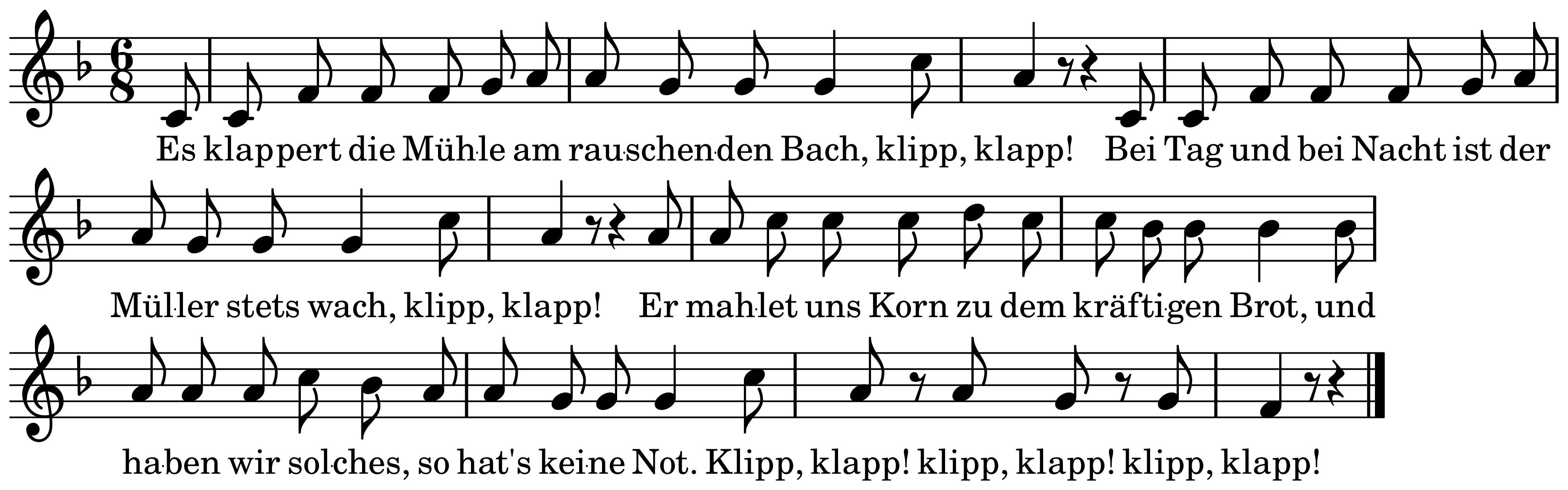
The melody of Es klappert die Mühle am rauschenden Bach on a staff, as engraved in the book
Download the tune

The melody as written on the staff, so you can learn the tune before you sing.

Verse 1

  1. Es klappert die Mühleehs klahp-pert dee mew-luhThe mill clatters
  2. am rauschenden Bach, klipp, klapp!ahm row-shuhn-duhn bahkh, klip, klahp!by the rushing brook, clip, clap!
  3. Bei Tag und bei Nachtbai tahk oont bai nahkhtBy day and by night
  4. ist der Müller stets wach, klipp, klapp!ist dair mewl-ler shtayts vahkh, klip, klahp!the miller is always awake, clip, clap!
  5. Er mahlet uns Kornair mah-luht oons kornHe grinds grain for us
  6. zu dem kräftigen Brot,tsoo daym krehf-ti-guhn broht,to make hearty bread,
  7. und haben wir solches,oont hah-buhn veer zol-khuhs,and if we have that,
  8. so hat's keine Not.zoh hahts kai-nuh noht.then there is no want.

Refrain

  1. Klipp, klapp! klipp, klapp! klipp, klapp!klip, klahp! klip, klahp! klip, klahp!Clip, clap! clip, clap! clip, clap!

Verse 2

  1. Flink laufen die Räderflink low-fuhn dee reh-derThe wheels run nimbly
  2. und drehen den Stein, klipp, klapp!oont dray-uhn dayn shtain, klip, klahp!and turn the stone, clip, clap!
  3. und mahlen den Weizenoont mah-luhn dayn vai-tsuhnand grind the wheat
  4. zu Mehl uns so fein, klipp, klapp!tsoo mayl oons zoh fain, klip, klahp!into flour for us so fine, clip, clap!
  5. Der Bäcker dann Zwiebackdair beh-ker dahn tsvee-bahkThe baker then bakes rusks
  6. und Kuchen d'raus bäckt,oont koo-khuhn drows behkt,and cake out of it,
  7. der immer den Kinderndair im-mer dayn kin-dernwhich to the children always
  8. besonders gut schmeckt.buh-zon-ders goot shmehkt.tastes especially good.

Verse 3

  1. Wenn reichliche Körnervehn raikh-li-khuh ker-nerWhen plentiful grains
  2. das Ackerfeld trägt, klipp, klapp!dahs ah-ker-fehlt trehkt, klip, klahp!are borne by the plowed field, clip, clap!
  3. die Mühle dann flinkdee mew-luh dahn flinkthen the mill nimbly
  4. ihre Räder bewegt, klipp, klapp!ee-ruh reh-der buh-vaykt, klip, klahp!sets its wheels going, clip, clap!
  5. Und schenkt uns der Himmeloont shehnkt oons dair him-muhlAnd if heaven gives us
  6. nur immerdar Brot,noor im-mer-dahr broht,bread for ever and ever,
  7. so sind wir geborgenzoh zint veer guh-bor-guhnthen we are safe
  8. und leiden nicht Not.oont lai-duhn nikht noht.and suffer no want.
About this song

Ernst Anschütz, a Leipzig schoolmaster, wrote these words about 1824 for the old tune of Es ritten drei Reiter. A water mill: the wheel turns the millstone, the stone grinds the corn, the baker bakes it. The 1900 page says what to do with the klipp, klapp: clap your hands on every one of them.

Where it comes from

The words: Friederike Merck, Unser Liederbuch. Die beliebtesten Kinderlieder (B. Schott's Söhne, Mainz, 1900), S. 11, "Die Mühle".

The tune: The source print's own engraving, so the words and the tune come off one page: Friederike Merck, Unser Liederbuch. Die beliebtesten Kinderlieder (B. Schott's Söhne, Mainz, 1900), S. 11, "Die Mühle", headed "Munter." and marked mfz and "sempre stacc.", the voice part above the piano accompaniment, four systems, F major, 6/8, one eighth of anacrusis. Every note is read off that engraving: pitches measured against the staff-line rows of the 3346 px page image, values off the flags (the engraver flags every eighth singly, there is not one beam in the piece) and off the rests. The tune itself is the Volksweise of "Es ritten drei Reiter zum Tore hinaus", which Anschütz's words were written to. Merck's F major lies inside the book's C-to-G range, so the key is kept; range c' to d''. Cross-checked note for note against the MIDI file the de.wikipedia article "Es klappert die Mühle am rauschenden Bach" carries in its infobox (commons "Es klappert die Mühle am rauschenden Bach.mid", also F major, 6/8; that article has no score block): of the 54 notes the two agree on 52, in order, degree for degree, including every bar of the klipp-klapp tail. They part only over the third line's upbeat and its first note, where Merck sets "Er mah-" a-a, matching the c-c of "Es klap-" and "Bei Tag" a third lower, and the Wikipedia file has a two-note upbeat f-a and then c'' on "mah". Merck's own page is printed here. 54 notes for the 54 syllables of verse 1 plus the refrain

From the book

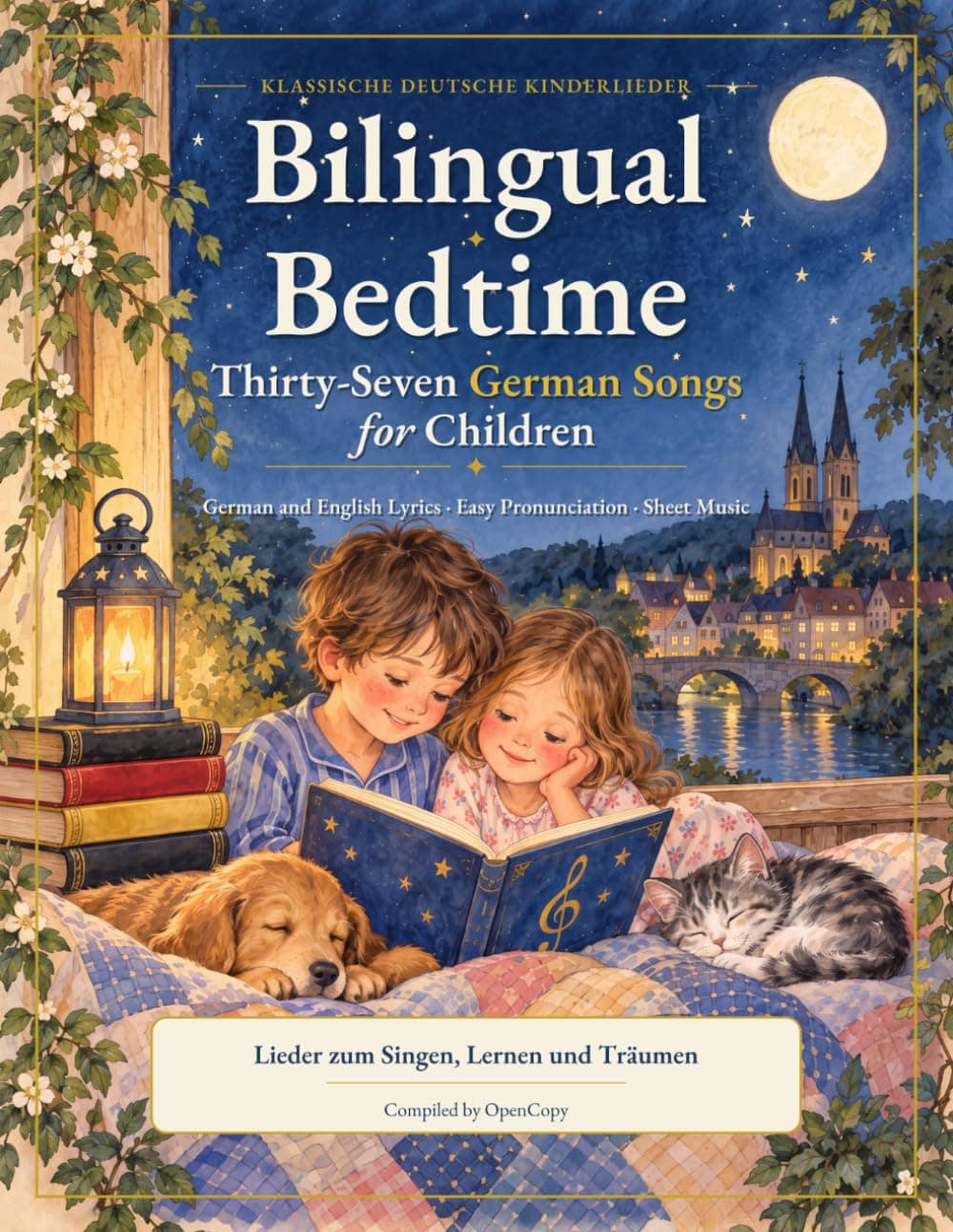
Bilingual Bedtime

Thirty-Seven German Songs for Children

Buy paperbackBuy KindleBuy hardcoverAbout this edition
Kommt ein Vogel geflogenAll 37 songsHänschen klein
opencopy© 2026
Look insideHow it worksBlogAboutJobsContactPrivacyTermsAccessibility