opencopyInterlinear Books
Look insideHow it worksBlogContact
  • Look inside
  • How it works
  • Blog
  • Contact
Bilingual Bedtime/German songs
WiegenliedLullaby

Weißt du, wie viel Sternlein stehen.

Weißt du, wie viel Sterne stehen
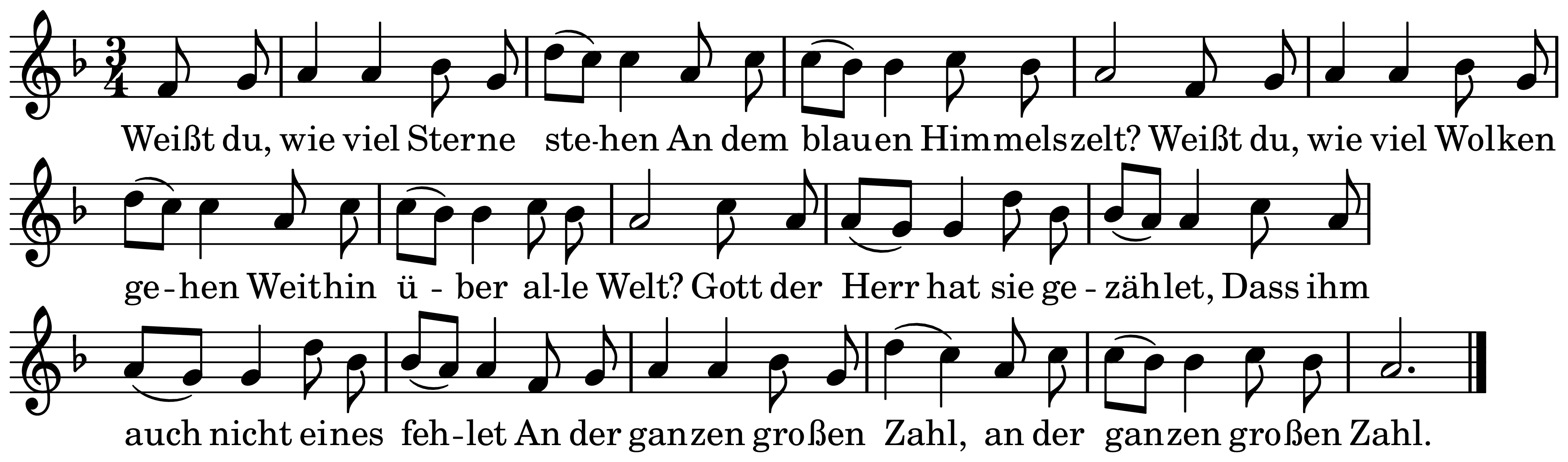
The melody of Weißt du, wie viel Sternlein stehen on a staff, as engraved in the book
Historische Fassung · Historical version
Download the tune

The melody as written on the staff, so you can learn the tune before you sing.

Verse 1

  1. Weißt du, wie viel Sterne stehenvaist doo, vee feel shtehr-nuh shtay-uhnDo you know how many stars stand
  2. An dem blauen Himmelszelt?ahn daym blow-uhn him-muhls-tsehlt?On the blue tent of the sky?
  3. Weißt du, wie viel Wolken gehenvaist doo, vee feel vol-kuhn gay-uhnDo you know how many clouds go
  4. Weithin über alle Welt?vait-hin ew-ber ahl-luh vehlt?Far out over all the world?
  5. Gott der Herr hat sie gezählet,got dair hehr haht zee guh-tseh-luht,God the Lord has counted them,
  6. Dass ihm auch nicht eines fehletdahs eem owkh nikht ai-nuhs fay-luhtSo that not one of them is missing to him
  7. An der ganzen großen Zahl. (bis)ahn dair gahn-tsuhn groh-suhn tsahl.From the whole great number. (repeat)

Verse 2

  1. Weißt du, wie viel Mücklein spielenvaist doo, vee feel mewk-lain shpee-luhnDo you know how many little gnats play
  2. In der heißen Sonnenglut?in dair hai-suhn zon-nuhn-gloot?In the hot glow of the sun?
  3. Wie viel Fischlein auch sich kühlenvee feel fish-lain owkh zikh kew-luhnHow many little fish also cool themselves
  4. In der hellen Wasserflut?in dair hehl-luhn vahs-ser-floot?In the bright rush of the water?
  5. Gott der Herr rief sie mit Namen,got dair hehr reef zee mit nah-muhn,God the Lord called them by name,
  6. Dass sie all ins Leben kamen,dahs zee ahl ins lay-buhn kah-muhn,So that they all came into life,
  7. Dass sie nun so fröhlich sind. (bis)dahs zee noon zoh frer-likh zint.So that they are now so happy. (repeat)

Verse 3

  1. Weißt du, wie viel Kindlein frühevaist doo, vee feel kint-lain frew-uhDo you know how many little children early
  2. Stehn aus ihrem Bettlein auf,shtayn ows ee-ruhm beht-lain owf,Get up out of their little bed,
  3. Dass sie ohne Sorg und Mühedahs zee oh-nuh zork oont mew-uhSo that without worry and trouble
  4. Fröhlich sind im Tageslauf?frer-likh zint im tah-guhs-lowf?They are happy all the day through?
  5. Gott im Himmel hat an allengot im him-muhl haht ahn ahl-luhnGod in heaven has, in them all,
  6. Seine Lust, sein Wohlgefallen,zai-nuh loost, zain vohl-guh-fahl-luhn,His delight, his good pleasure,
  7. Kennt auch dich und hat dich lieb. (bis)kehnt owkh dikh oont haht dikh leep.Knows you too and loves you. (repeat)
About this song

Wilhelm Hey slipped this riddle into the serious appendix of his second fable book, 1837. Each verse asks a question no child can answer, then gives God's answer. The tune is an older Volksweise. Sing the last line twice. The old print reads Sterne where families today sing Sternlein, little stars.

Where it comes from

The words: Gottfried Wilhelm Fink, Musikalischer Hausschatz der Deutschen (Mayer und Wigand, Leipzig, 1843), S. 16, Nr. 30 "Er kennt sie Alle", signed W. Hey; the words first printed anonymously in Wilhelm Hey, Noch funfzig Fabeln für Kinder, ernsthafter Anhang (Friedrich Andreas Perthes, Gotha, 1837).

The tune: The <score> block in the Melodie und Text section of the de.wikipedia article 'Weißt du, wie viel Sternlein stehen', which reproduces the liederprojekt.org sheet lied27784: F major, 3/4, an upbeat of two eighths, the opening strain and the middle phrase each under a volta repeat, the closing phrase written out twice. Fetched as wikitext through the MediaWiki API. Cross-checked against a period engraving of the same Volksweise: Gottfried Wilhelm Fink, Musikalischer Hausschatz der Deutschen (Leipzig, 1843), S. 16, Nr. 29 'Der Sehnsucht Treue' ('So viel Stern am Himmel stehen'), whose page also prints Hey's words as Nr. 30 'Er kennt sie Alle', headed 'Nach derselben Weise' and signed 'W. Hey.'. Fink agrees on the 3/4 metre, the two-eighth upbeat, the repeat sign closing the opening strain, the repeated middle phrase and the closing phrase written out twice, which is why the seventh line is sung twice. Fink stands a whole tone higher in G major and is a piano-vocal setting; F major, the reference's own key and the key of the Evangelisches Gesangbuch 511, is kept. 70 notes, ten two-note slurs, 60 lyric syllables. The whole of verse 1 is engraved, both repeats written out

From the book

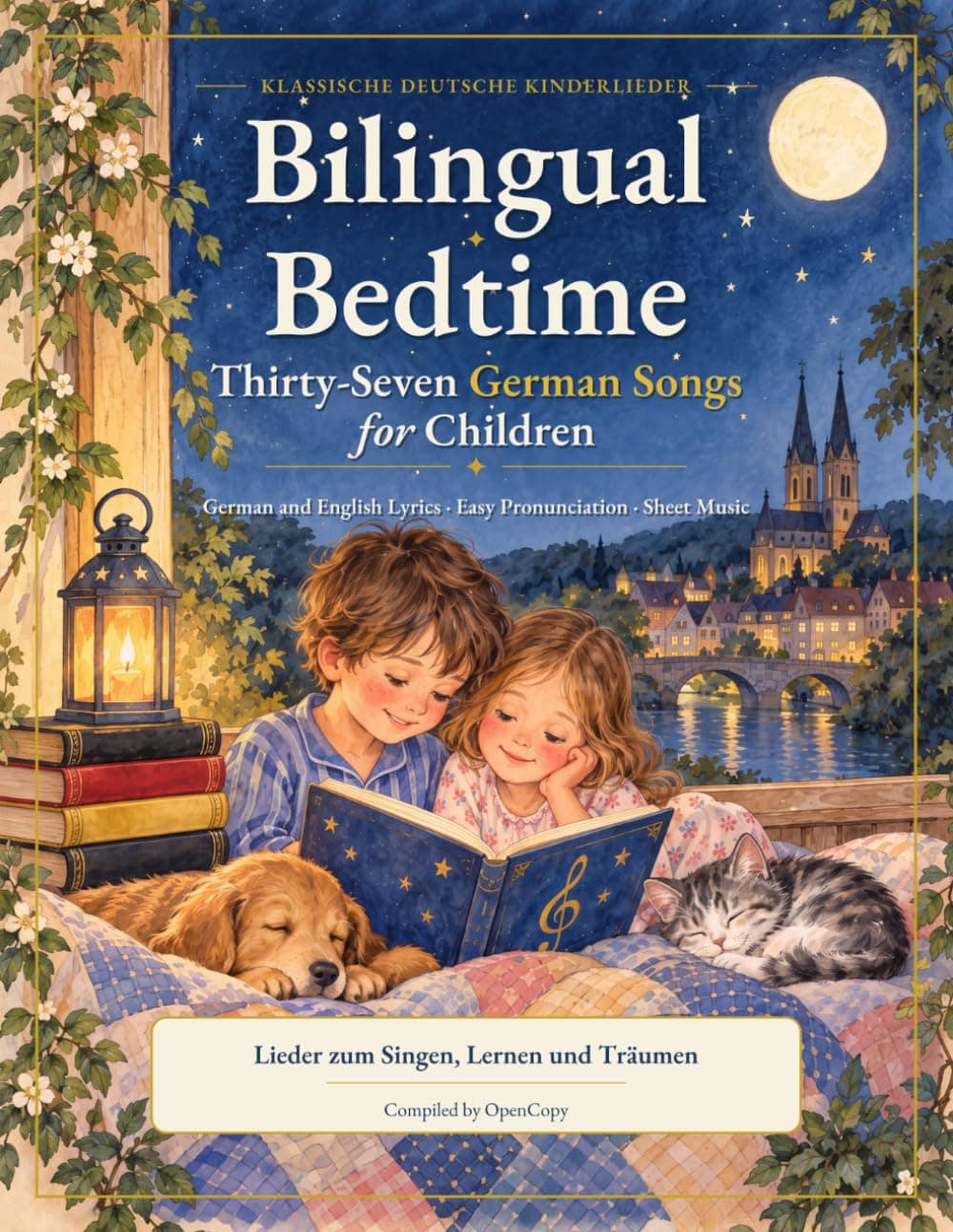
Bilingual Bedtime

Thirty-Seven German Songs for Children

Buy paperbackBuy KindleBuy hardcoverAbout this edition
Wer hat die schönsten SchäfchenAll 37 songsMüde bin ich, geh zur Ruh
opencopy© 2026
Look insideHow it worksBlogAboutJobsContactPrivacyTermsAccessibility